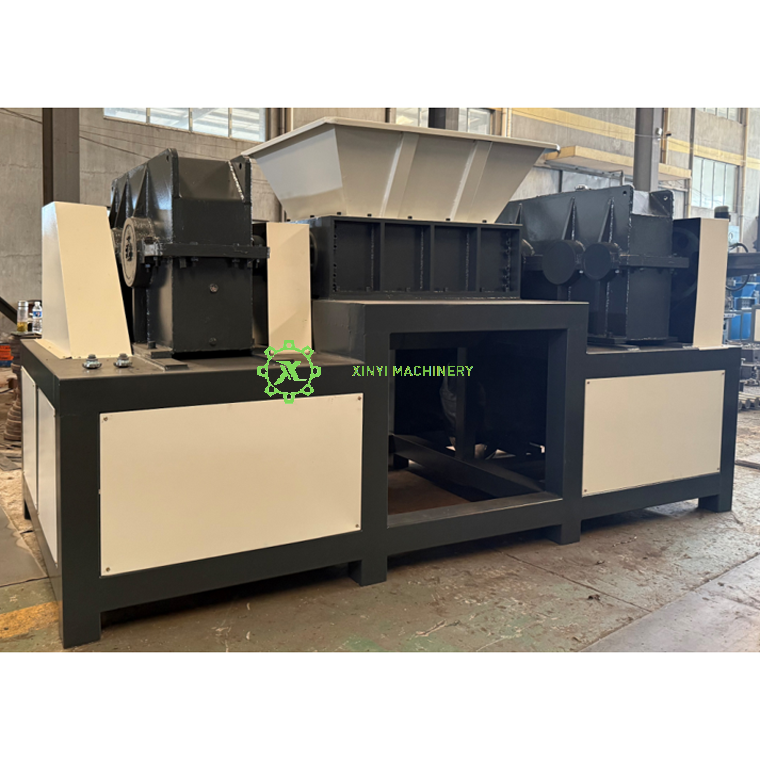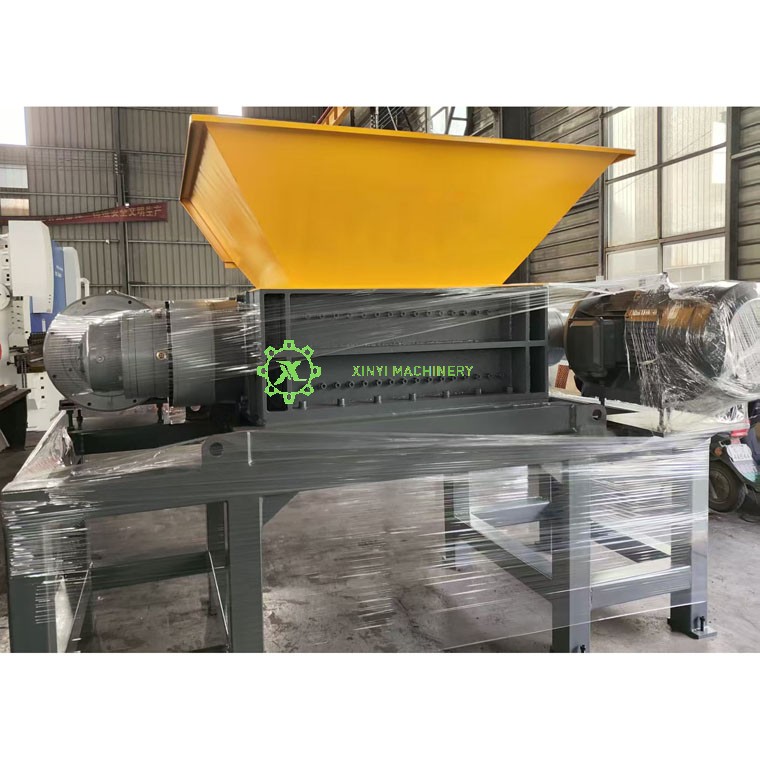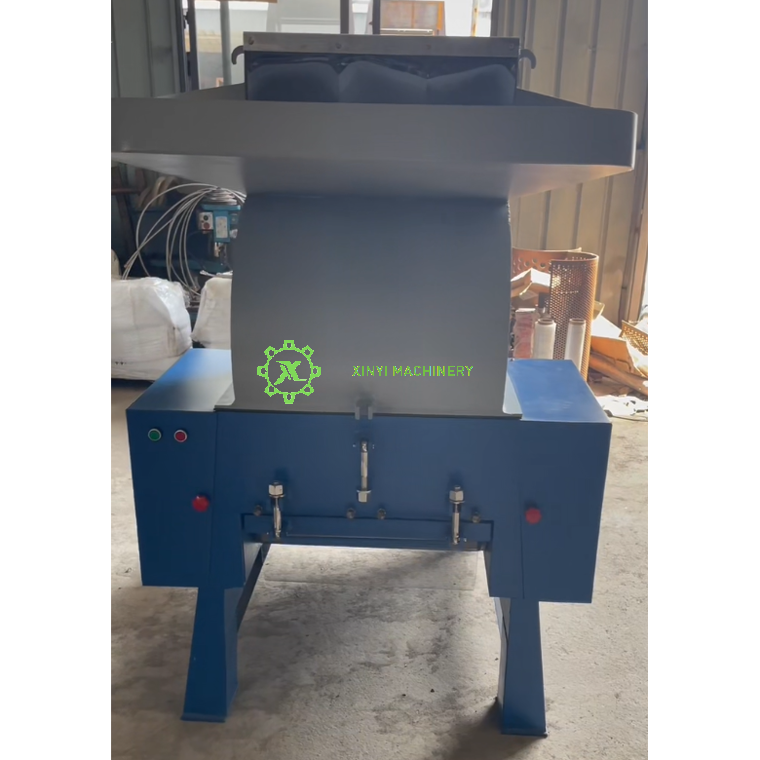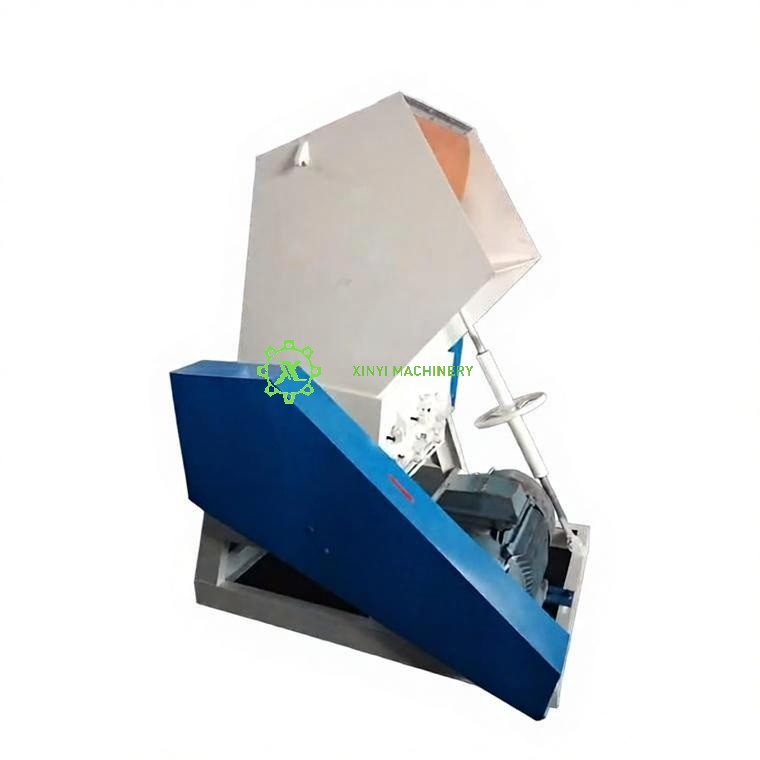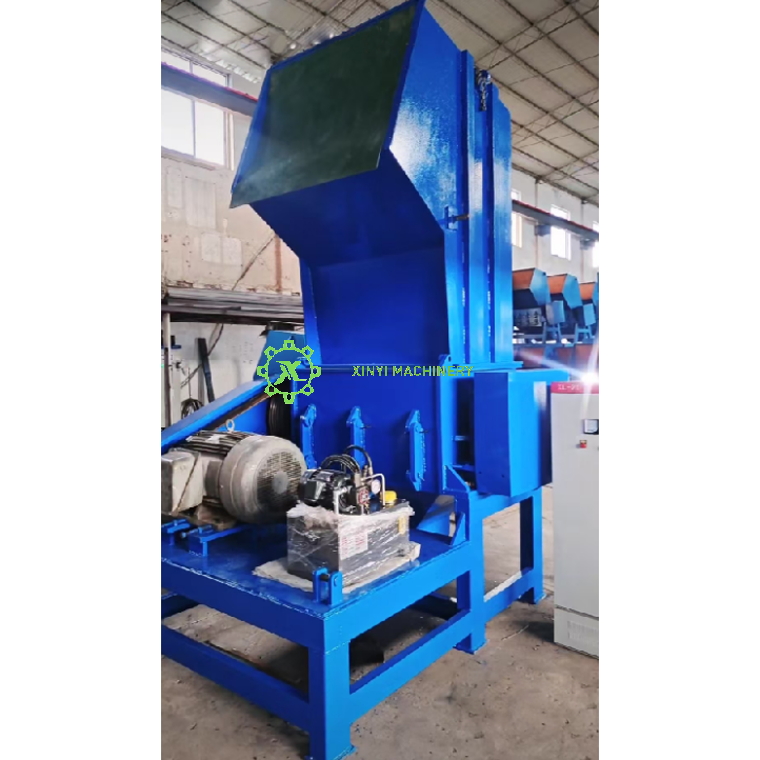
An Industrial Heavy Duty Grinder (also commonly called a heavy duty crusher, granulator, or size reduction machine) is a high powered machine designed to break down large, bulky, tough, or abrasive materials into smaller, uniform particles or chips. Unlike light duty shredders or grinders used in offices or small workshops, industrial heavy duty grinders are built for continuous 24/7 operation and can handle:
· Hard plastics (e.g., purgings, lumps, thick walled parts, engineering plastics like ABS, PC, PA)
· Rubber (tires, conveyor belts, seals)
· Wood (pallets, demolition wood, tree trunks)
· Metals (aluminum profiles, thin steel sheets, copper wire – often as a pre shredder)
· Composite materials (fiberglass, cable scrap, electronic waste)
They are the first stage in many recycling lines, reducing oversized feed material to a consistent size (usually 10 mm – 50 mm) so it can be further processed by a granulator, extruder, or washing system.
Key Characteristics of a True Industrial Heavy Duty Grinder
Feature | Why It Matters |
Rugged, heavy rotor (solid steel, welded or cast) | High inertia to smash through thick or hard materials without stalling. |
High torque, low RPM (50–300 rpm) | Provides cutting/pulverizing force without generating excessive heat or dust. |
Reversible cutting knives/hammers | Extends service life; often made from tool steel or carbide. |
Massive feed hopper | Accepts bulky items (e.g., whole plastic drums, furniture, thick pipes). |
Screened discharge | Controls output particle size – interchangeable screens (e.g., 20 mm, 40 mm). |
Overload protection (hydraulic or electronic) | Prevents damage when unshreddable items (e.g., metal bolts) enter. |
Dust & noise suppression | Essential for indoor industrial environments. |
Note: In some industries, “industrial grinder” overlaps with “shredder” or “crusher.” Generally:
· Shredder → Low RPM, high torque, coarse output (50–300 mm).
· Heavy duty grinder/crusher → Medium RPM (200–600), finer output (10–50 mm).
· Granulator → Higher RPM (400–1000), very fine output (3–12 mm) for clean, smaller feed.
Common Applications in Plastic Recycling
For a company like XINYI MACHINERY, the industrial heavy duty grinder is typically used right at the front of the line:
1. Breaking down large reject parts – e.g., 50 kg PP/PE purgings or thick injection molded drums.
2. Pre crushing baled or bulky waste – bales of film, large pipes, crates.
3. Size reduction for washing lines – to open up material for efficient cleaning.
4. Feeding an extruder granulator – after grinding, the material is often further granulated (if needed) then pelletized.
Without a heavy duty grinder, a standard granulator would jam or suffer severe wear when fed oversized or hard materials.
Example Specifications (Typical Industrial Unit)
Parameter | Range |
Motor power | 30 kW – 250 kW (40 HP – 335 HP) |
Rotor diameter | 300 mm – 1000 mm |
Rotor length | 600 mm – 2000 mm |
Throughput (plastics) | 500 kg/h – 8000 kg/h |
Output size | 10 mm – 80 mm (screen controlled) |
Cutting knives | 2 – 8 rows (rotating); 2 – 6 fixed knives |
Why Choose XINYI MACHINERY for This Equipment?
XINYI offers:
· Integrated systems: Heavy duty grinder → granulator → extruder pelletizing line – all from one supplier.
· Customizable designs for different materials (soft plastic film, hard engineering plastics, rubber, etc.).
· Heavy duty bearings, shaft seals, and wear resistant cutting chambers suited for high abrasion feeds (e.g., glass filled PP or copper wire).
If you are building a recycling line for clean PP/PE flakes, the grinder would be used before washing (if you start with bulky rejects) or after drying (if you need finer granulation before extrusion). But for clean, already small flakes, you may not need a heavy duty grinder – a standard granulator would suffice.
In Summary
Question | Answer |
What is it? | An industrial machine for reducing large, tough, or bulky materials into small, uniform chips or particles, built for continuous heavy duty operation. |
What makes it “heavy duty”? | Solid rotor, low high torque drive, thick cutting chamber, screens, overload protection, and ability to handle metals, thick plastics, rubber, and wood. |
When do you need one? | When feed material is larger than ~150 mm, very thick (>20 mm), or contains contaminants that would break a standard granulator. |
What does XINYI offer? | Complete heavy duty grinding solutions integrated with the granulators and pelletizing extruders – suitable for plastic, rubber, and light metal recycling. |